
A lot of SMBs are being told to build a “software factory”
Fair enough. The idea is useful.
But a software factory is not a collection of AI tools. It is a repeatable system for turning intent into reliable software.
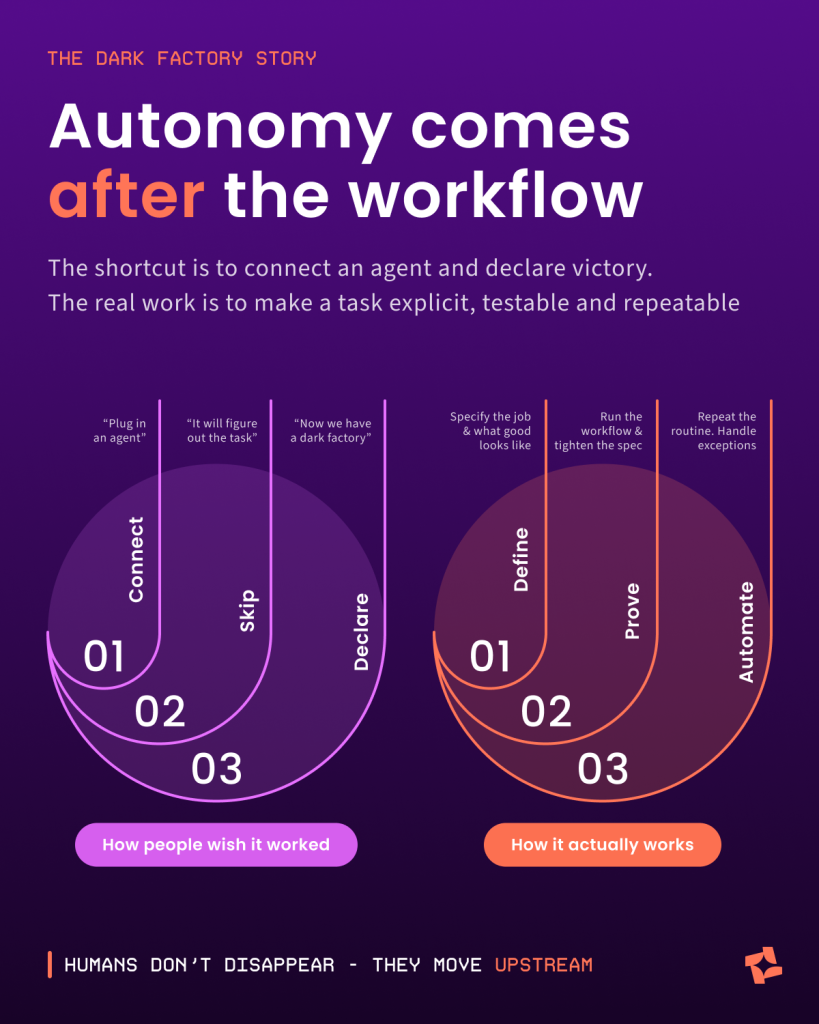
A software factory is not a plug-in. It is a task pipeline that has to be made explicit before any agent can run it reliably.
And you must prepare your SMB operations for it.
That makes it an investment. And an investment has to defend its ROI.
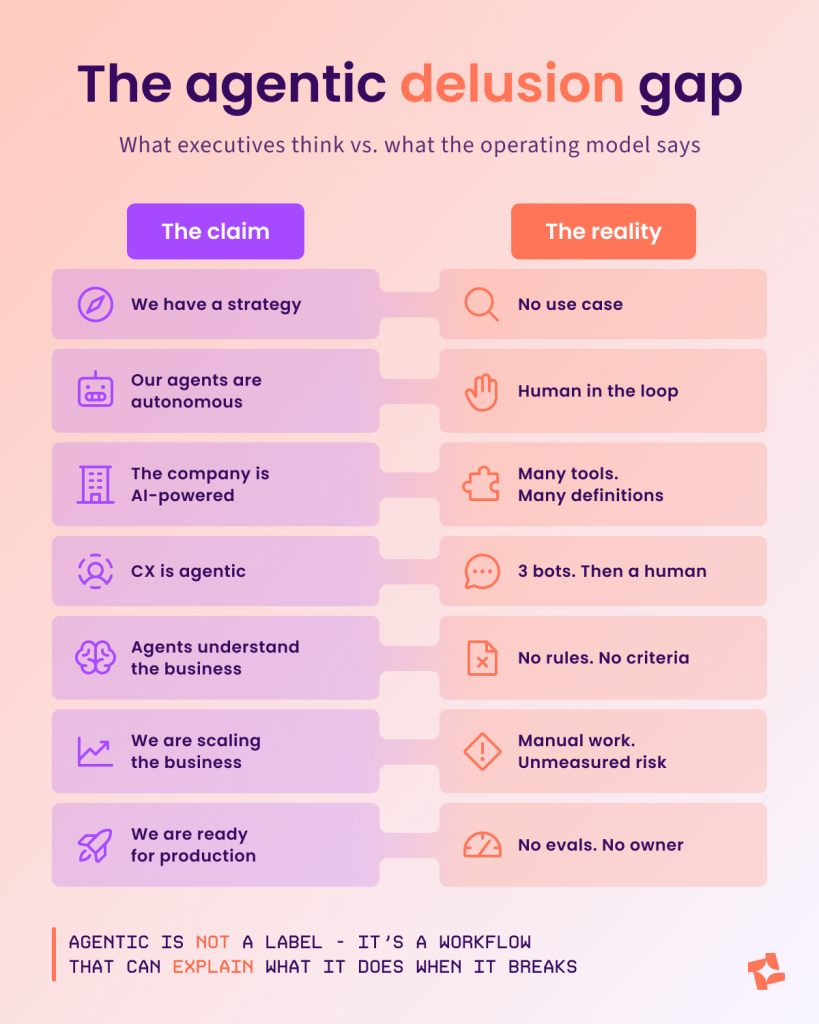
The first cost is often invisible: teams believe they already have an agentic operation when they have only bought licenses and asked everyone to find a use case.
The question is not just, “How much can AI produce?”
It is whether the factory produces enough useful work for what it costs to run every day.
That cost is higher than a model invoice. It includes repeated context setup, agents making unnecessary tool calls, retry loops that keep running, and expensive reasoning applied to work that a script could have completed in milliseconds.
The infographic above shows the operating side of the equation: eight practical levers for lowering the cost of change without turning your workflow into a brittle pile of automations.
First, what do I mean by a software factory?
A software factory is a system that takes a business need and moves it toward a working, trustworthy outcome. It has people, agents, models, scripts, tools, review points, and a definition of done.
It is not just a chatbot in front of your product.
It is not an agent that can write code in a demo.
It is the operating system around those things: how work enters, how context is handled, which tool does what, when people step in, and how the result gets verified.
If you are building that system, efficiency is not an afterthought. It is part of the design.
Context caching
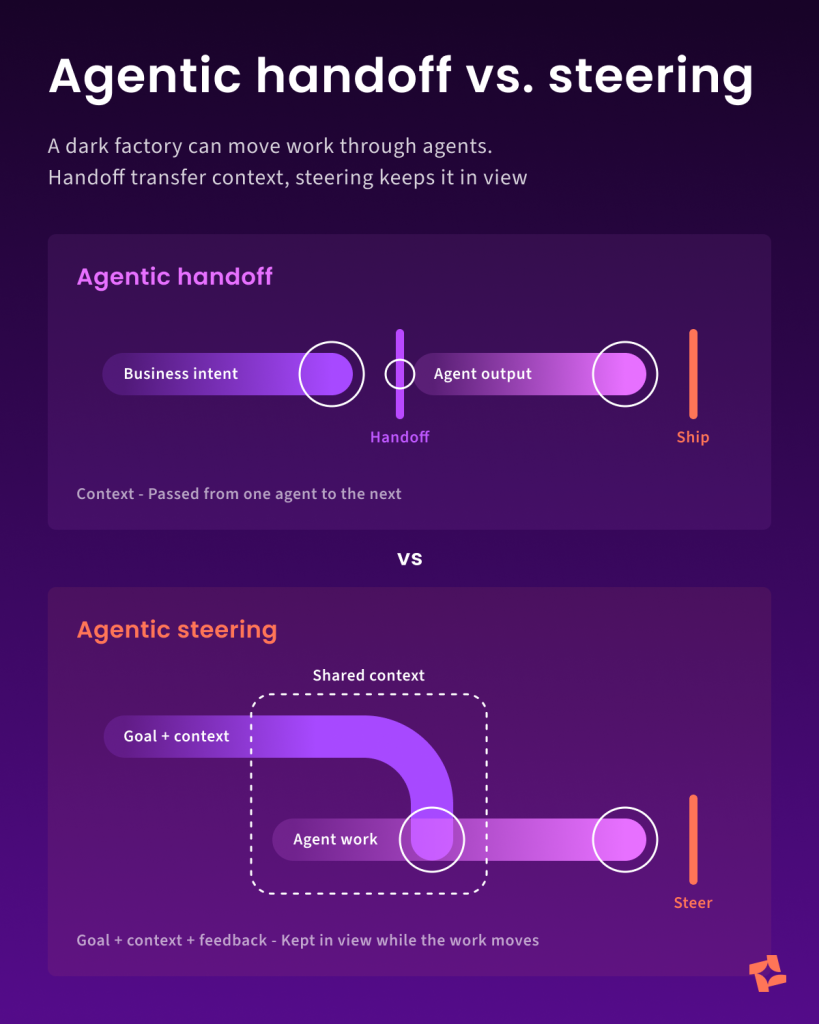
Every agent should not have to rediscover your company, codebase, product decisions, and constraints from scratch.
Some context changes constantly. Use the live information for that. But a surprising amount is stable: naming conventions, product vocabulary, architecture decisions, standards, and the rules that make a result useful to your team.
Reuse that stable context. Do not pay to rebuild it for every task.
The same idea shows up in how context moves between agents.
Agent routing
Not all work needs the same kind of intelligence.
Some tasks are narrow and well defined: review a pull request against a checklist, extract information from a known document type, or generate a report from a structured source. Other tasks need broader judgement because the brief is incomplete or the consequences are larger.
Route the first kind to specialist agents. Keep frontier models for generalist reasoning where they genuinely add value.
This is not about choosing the cheapest model at every turn. It is about making a deliberate match between the work and the capability required.
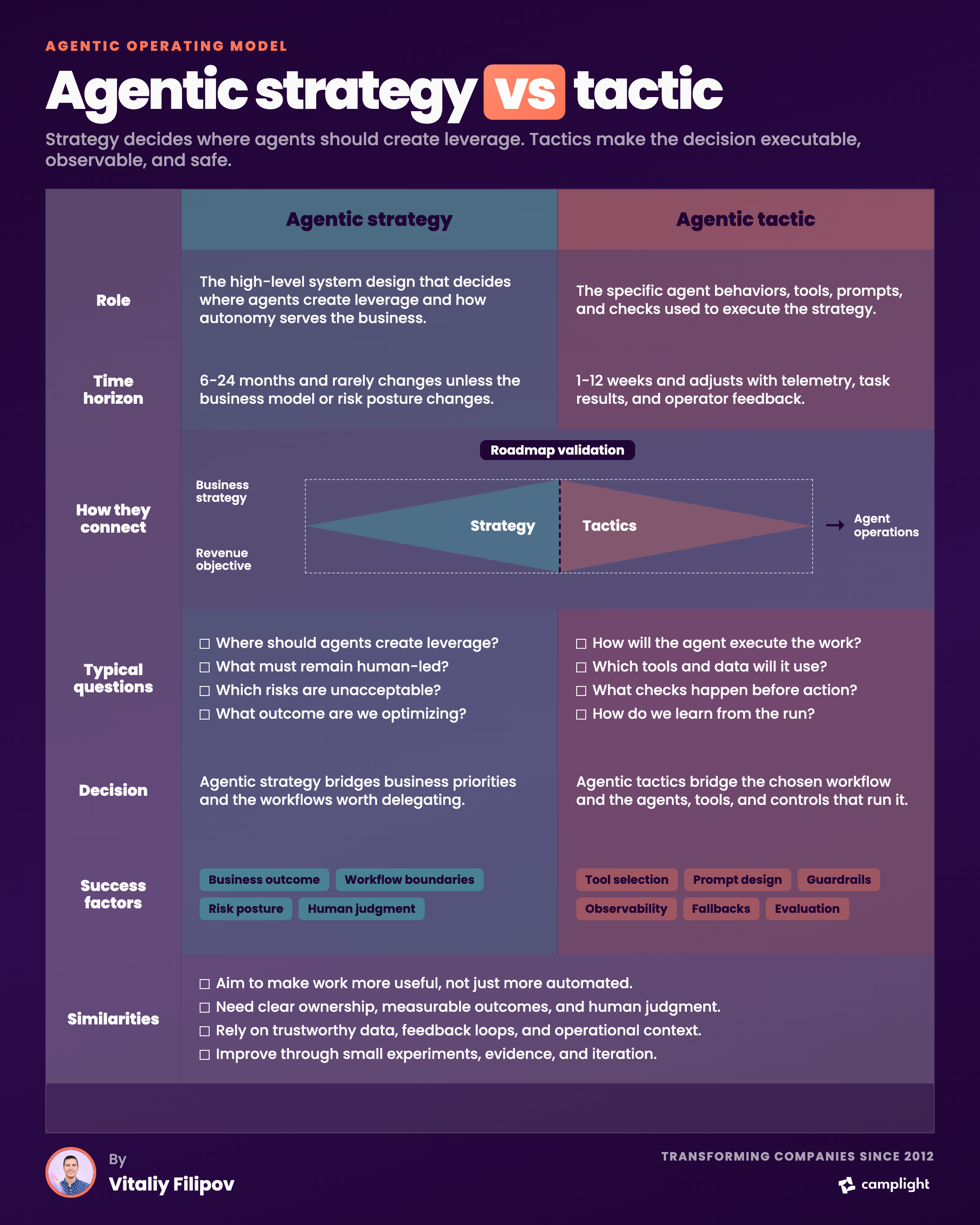
Routing is a tactic. The strategy above it decides where agents should create leverage at all.
Skip the agent when the rules are known
There is a temptation to put an agent in every box of the workflow. Usually because it looks more advanced.
Do not.
If a task has known rules and a deterministic answer, use a script, a query, or a conventional integration. Parsing a date, formatting a document, checking a field, updating a dashboard: these are often tool calls, not reasoning problems.
An agent should decide when judgement is useful. It should not impersonate a script.
Stop when the work is validated
Agentic systems can be oddly bad at stopping. They check again, polish again, call another tool, revisit a decision that has already been verified.
Define what counts as done before the workflow starts. Then stop the loop once that condition is met.
The goal is not to extract every possible thought from a model. The goal is to get a dependable result and move on.
Bound retries, then escalate
Retries are useful when they are deliberate. A temporary API failure or a malformed input may deserve another attempt.
But a system that keeps trying the same failing approach is not resilient. It is quietly spending money while producing no new information.
Set a small retry budget. After that, escalate with the evidence already collected: what was attempted, what failed, and what decision is needed from a person.
That gives the human reviewer something useful to act on instead of a vague “the agent got stuck.”
Reuse verified results
Once the workflow has a verified answer, treat it as an asset.
Do not call another model or tool to rediscover an approved requirement, an already-checked source, or a validated intermediate result. Persist the evidence where the next step can use it.
This lowers cost, but it also makes the factory easier to audit. You can see what the system knew, why it made a decision, and where the input came from.
Batch non-urgent loops
Not every task belongs on the immediate path.
Background enrichment, reporting, cleanup, documentation updates, and other non-urgent work can run in a scheduled lane. Batching these loops reduces interruption, makes costs easier to predict, and keeps the real-time path available for work that actually needs a fast response.
Speed is useful. Urgency theater is expensive.
Define the output contract
Ambiguous requests create oversized outputs.
If the workflow needs a list of three risks, ask for three risks. If it needs a proposed next action with supporting evidence, specify that. If it needs a pass/fail decision, define the criteria.
The smallest useful deliverable is usually cheaper to produce, easier to verify, and more likely to move work forward.
Cost control is not the same as cutting capability
None of these levers are about making your software factory less capable. They are about making it intentional.
The model bill matters, of course. But the bigger opportunity is designing the workflow so that expensive reasoning is applied where it changes the outcome, while known work stays simple, verified work is reused, and failures do not turn into endless loops.
Your AI transformation should leave you owning a more capable software factory as an asset.
Not simply paying a larger agent bill.
At Camplight, we help companies turn ambitious AI ideas into measurable, reliable workflows. If you are trying to make this practical in your business, get in touch.